
Take Advantage of Grand County Wildfire Council's Free Risk Assessments, Cost-Share Programs, Chipping Days, Home Hardening Resources, and Firewise Designation Support
 Hopefully you've already taken care of the four quick and easy ways to prepare for a wildfire highlighted in the last post: signing up for GC Alerts, ordering a reflective address sign, knowing your evacuation zone, and bookmarking your fire info sources. Now let's dig into how you can actively protect your property against wildfire risk. It's often your most valuable asset, so it's absolutely worth protecting! The good news is we have some incredible local resources to help you. Grand County Wildfire Council (GCWC), a local nonprofit that's been working to keep Grand County residents fire-ready for over a decade, offers a wealth of resources that many property owners don't even know exist.
GET A FREE WILDFIRE RISK ASSESSMENT
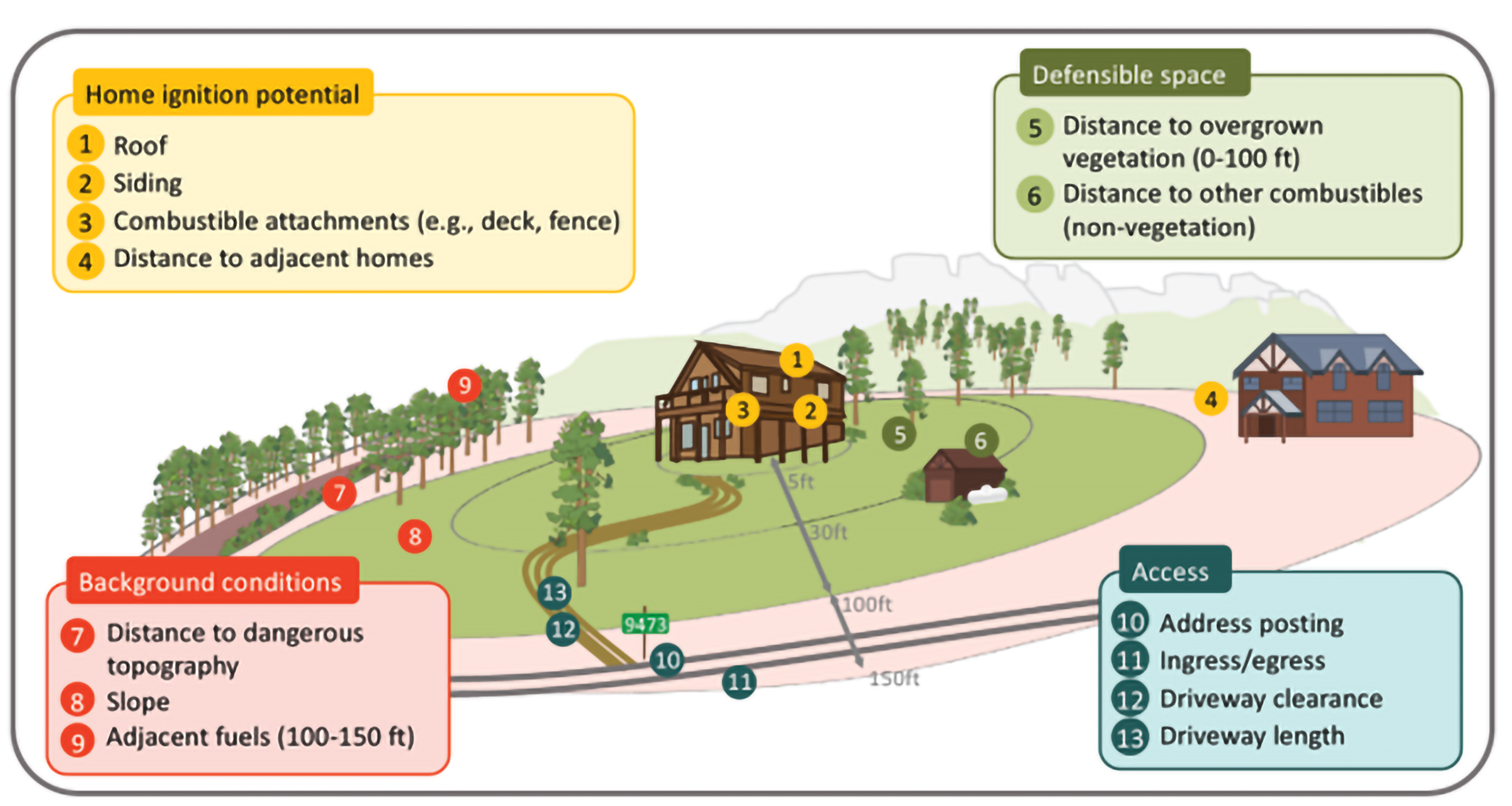 Grand County Wildfire Council partners with Grand Fire to offer free wildfire risk assessments for property owners in Grand County. They'll walk your property and discuss general mitigation measures like building materials, vegetation, fire behavior, forest health + evacuation preparedness. Keep in mind, you'll need to be present for the walk through.
Assessments are offered May - October and typically are scheduled 2-4 weeks out after requesting one online. The assessment typically takes about 45 minutes.
Wondering what kinds of things they assess and look for? Check out this Wildfire Home + Property Checklist to learn more about assessing and minimizing risk at your property!
CREATE DEFENSIBLE SPACE AROUND YOUR HOME
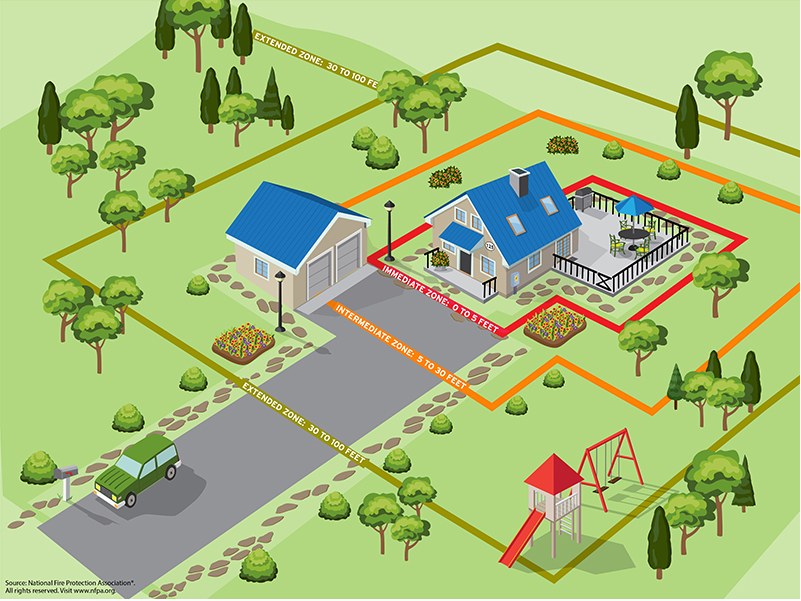 Most of us have heard the term "defensible space" thrown around without knowing what it actually means. Defensible space is essentially the area around your home that you manage to reduce wildfire risk: it starts with something called the Home Ignition Zone (HIZ), which is just a way of describing your home and the area immediately surrounding it. The HIZ takes into account both how vulnerable your home's structure is to ignition and the quality of the space around it. In practice, defensible space is broken into zones. Zone 1 covers the area from 0 to 30 feet out from your home: the goal is to be "lean, clean, and green." This means removing dead vegetation, keeping plants trimmed, and creating separation between plants and trees so fire has less to grab onto. Zone 2 extends from 30 to 100 feet out and focuses on reducing fuel density: thinning trees, mowing grasses, and removing what are called "ladder fuels," which are basically the low-hanging branches and tall grasses that allow a ground fire to climb up into the tree canopy. The goal in both zones is simple: give fire less to work with as it approaches your home. GCWC has great tools and resources to help you figure out exactly what this looks like for your specific property. You can take a defensible space self-assessment survey, accurately determine your home ignition zone, and more.
APPLY FOR COST-SHARE PROGRAMS
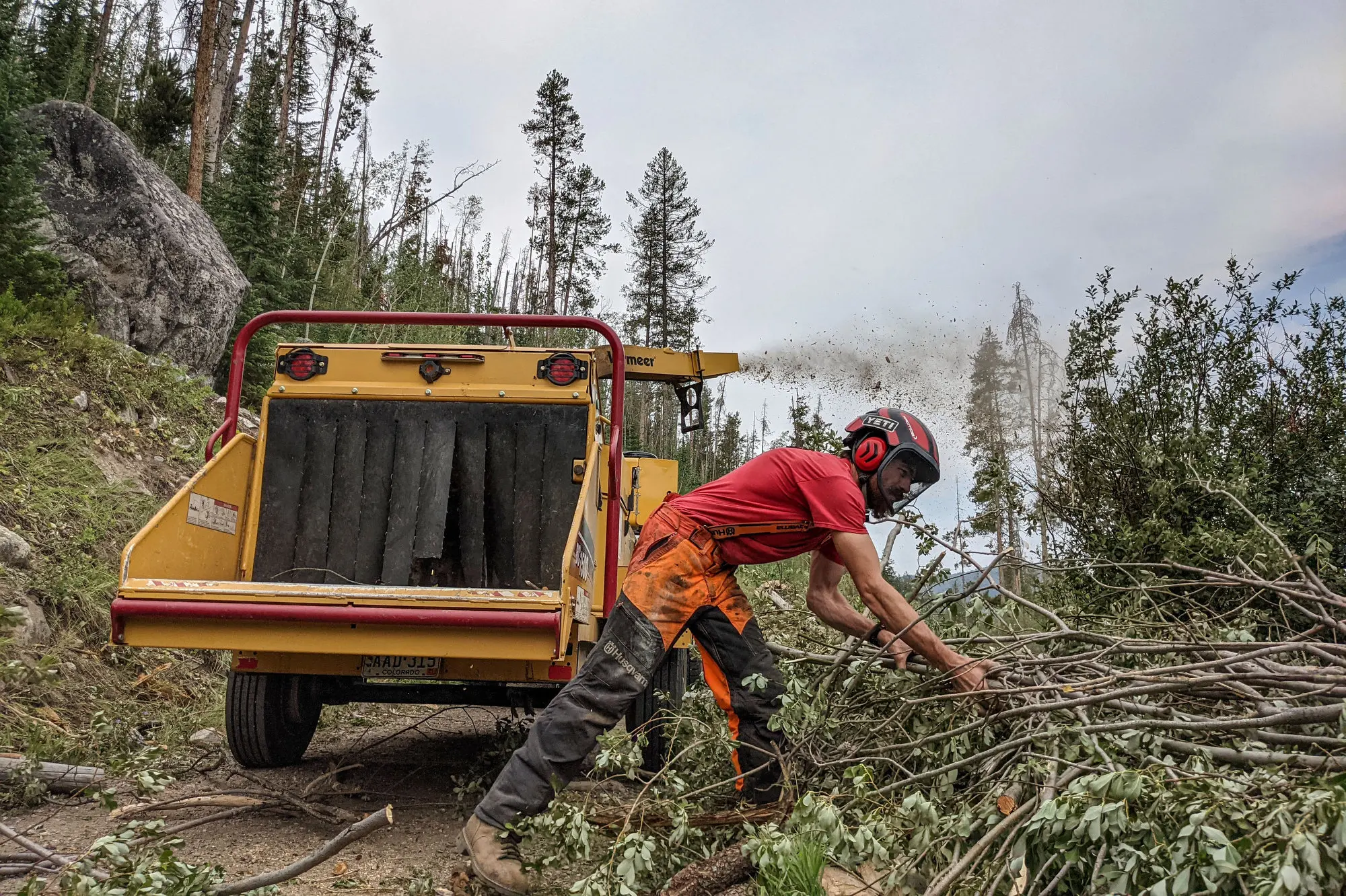 A lot of Grand County property owners aren't aware that GCWC offers three cost-share programs to help offset the cost of mitigation work. Read: they will help pay for it. The first program is focused on the home ignition zone and egress routes (think safety items). We're talking defensible space work immediately around your home and making sure you can actually get out safely if you need to. The second program is geared toward bigger-picture fuels reduction at the community level, making it a great fit for HOAs, large parcel owners, and landowner groups who want to tackle mitigation on a larger scale. The third is geared toward reducing structure ignition potential. Whether you're a single homeowner looking to protect your property or part of a neighborhood ready to work together, there's likely a program that fits your situation. Cost sharing is generally limited to 50% of the total fuels treatment cost, $1,500 per acre, or $5,000 per property, whichever is least. Check out all the options, eligibility requirements, and applications for cost-share assistance here. It's definitely worth seeing what you (or your HOA) could qualify for!
MARK YOU CALENDAR FOR COMMUNITY CHIPPING DAYS 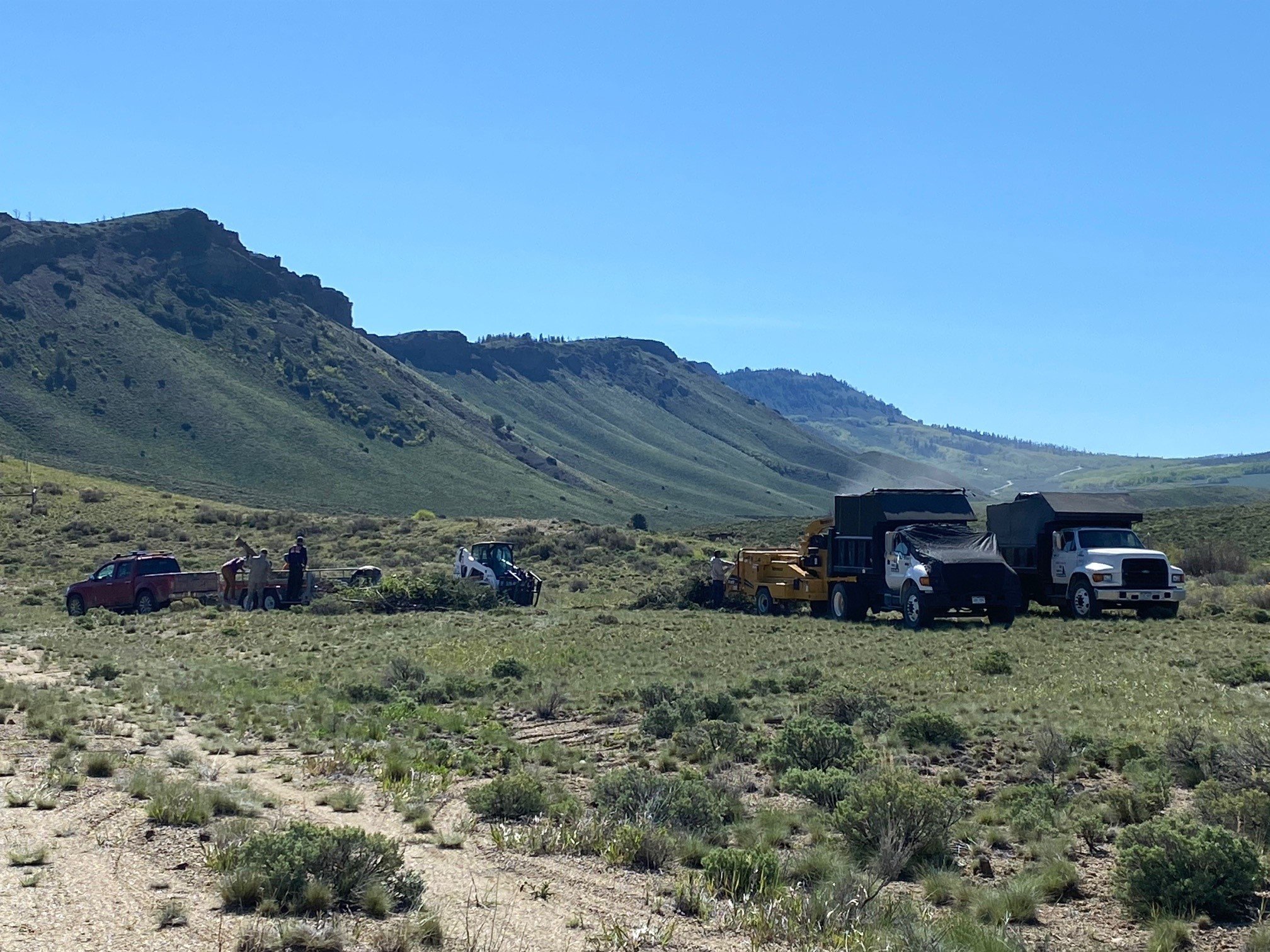
Once you've cleared brush and vegetation from around your home, you need to do something with it! Enter: community chipping days. Every summer, GCWC hosts about four community chipping days where local residents can bring their slash completely free of charge. It's one of the most practical and community-minded programs they offer, and it takes some of the harder mitigation work (debris disposal) off your plate. Chipping days run from 9am to 3pm on Saturdays, and the next one of the 2026 season is scheduled for June 20th at Grand Fire Protection District in Granby. They accept trees, tree branches, small diameter logs, brush, sagebrush, and juniper bushes. And if you need wood chips afterward, GCWC even lets you haul them off (for free) by the truckload after each event. Pro tip: throw a tarp in your trunk or truck bed to make unloading easier. Check out the full 2026 schedule here.
HARDEN YOUR HOME
 Defensible space is about managing what's around your home. Home hardening is about the home itself. Even small changes can make a meaningful difference in how your home holds up if wildfire threatens. The basic idea is that most homes aren't lost because a wall of flame rolls directly over them: they ignite from embers that land on or near vulnerable spots on the structure. So knowing where those vulnerable spots are is key. The areas worth paying closest attention to are your roof and gutters (keep them clear of pine needles and debris, and avoid wood shake shingles if you're ever replacing them), your vents (metal mesh screens of 1/8-inch or less help prevent embers from getting inside), your windows (multi-pane and tempered glass hold up significantly better), your deck and fences (noncombustible materials where possible, and nothing stored underneath the deck), and your garage (weather stripping around doors goes a long way). GCWC has a Home Hardening Pilot program in the works as well as a wildly detailed checklist to help you prioritize what to tackle first. And if you've already scheduled a free risk assessment, that's a great opportunity to ask specifically about your home's most vulnerable spots!
GET A NEIGHBORHOOD FIREWISE DESIGNATION
 Wildfire preparedness works best when it's not just individual homeowners acting alone. Ideally, whole neighborhoods get involved. That's the thinking behind getting a Firewise USA designation, a national recognition program that gives communities a framework to get organized, assess their collective risk, and take action together to reduce wildfire danger at the neighborhood level.
To earn and maintain the Firewise designation, communities meet a set of voluntary criteria each year: things like holding an annual Firewise event, completing a wildfire risk assessment, and investing a minimum equivalent of volunteer hours in risk reduction actions. It's all about building an ongoing culture of preparedness in your neighborhood. Winter Park Highlands in Tabernash was the second neighborhood in Grand County to earn Firewise recognition, back in 2013, and several other Grand County communities have followed since. If your HOA or neighborhood isn't already designated, it might be worth starting that conversation! GCWC is ready to help walk you through the process. Learn more and connect with Grand County Wildfire Council here.
BONUS BENEFITS
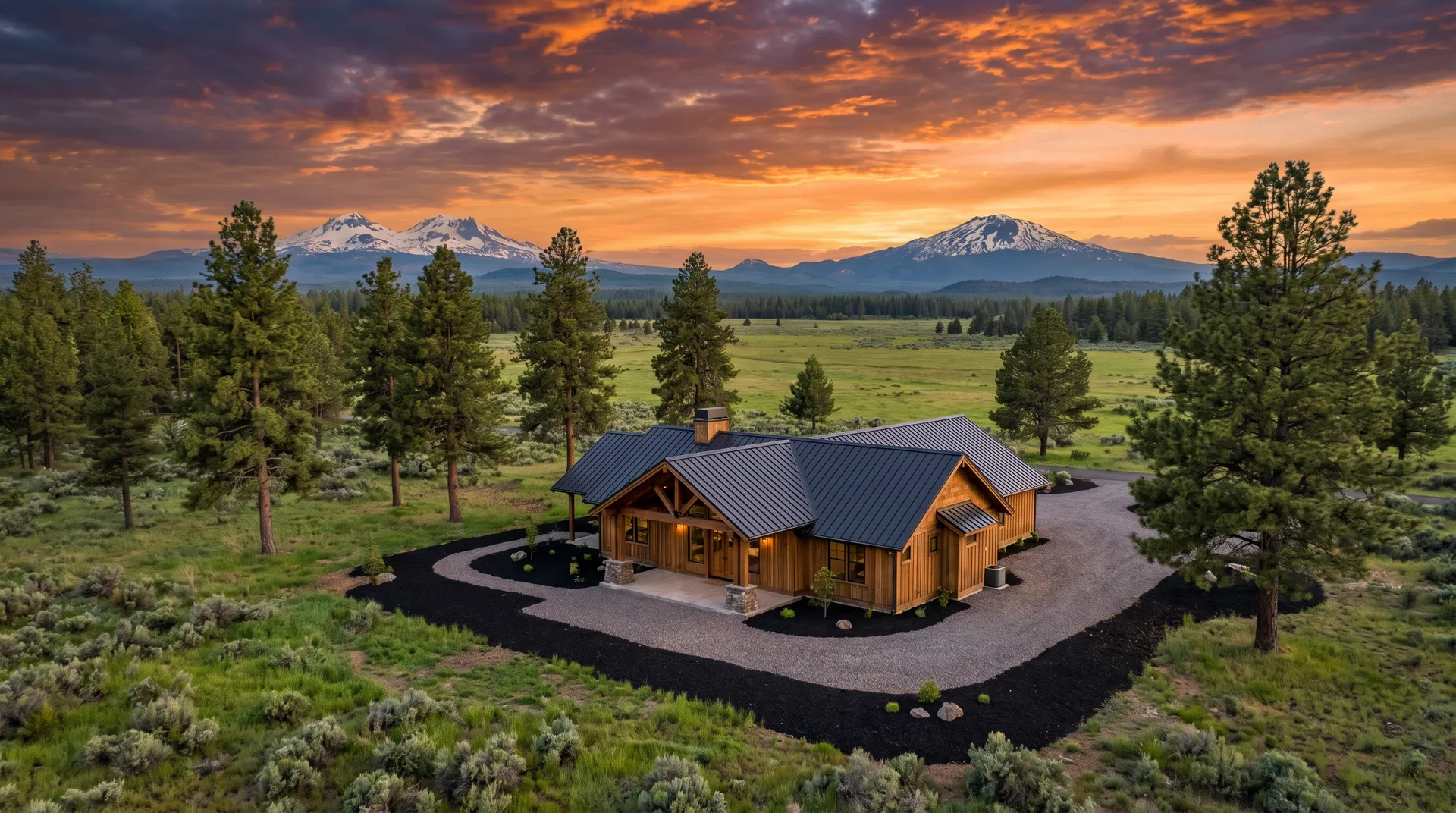 And taking steps to mitigate your home for wildfire isn't just about safety! Mitigation work can ensure homeowners insurance eligibility and even potentially lower your homeowner's insurance premium. Some insurance providers offer discounts or other benefits for homes that meet defensible space standards or carry Firewise designation, and being proactive about mitigation can make your property easier and less costly to insure overall. It's absolutely worth a direct conversation with your insurance provider to ask what steps might qualify you for better rates or coverage. Every policy is different, but it is for sure worth asking!
On the property value side, a well-maintained, mitigated property is increasingly attractive in a wildfire-prone area. Buyers are paying attention to wildfire risk more than ever, and a home with documented mitigation work, a clean defensible space, and ideally a Firewise-designated neighborhood is a genuinely stronger listing. Think of the work you put in now as an investment that pays off in peace of mind today and potentially in your sale price down the road!
WHO TO CALL?
Once you've had your free risk assessment and have a sense of what mitigation work makes sense for your property, you might need to hire a contractor. And I'm here to help! As a local realtor with deep roots in Grand County, I've built up a solid network of trusted local contractors who can help you tackle everything from defensible space work to home hardening projects. Feel free to reach out - I'd love to help point you in the right direction!
MORE TO COME!
And stay tuned for the third post in this series, where I'll break down everything you need to know about fire restrictions and fire safety in Grand County, including what the different restriction stages actually mean, when Red Flag Warnings apply, and what you can and can't burn.
Posted by Leah Bishop on
Enjoy this blog post? Click here to subscribe for updates
Leave A Comment